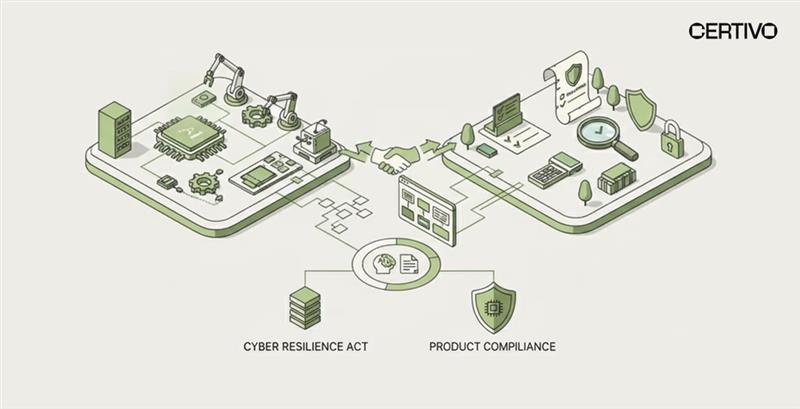
The Cyber Resilience Act creates new requirements that manufacturers must follow to meet product compliance standards in the European Union. The Act establishes cybersecurity requirements that extend throughout all operational areas which differ from standard compliance systems that function in separate business units. Manufacturers in the enterprise sector must now treat technical problems as business threats that affect their ability to operate and obtain market entry and maintain organizational control.
Digital products need to present evidence of secure design and vulnerability management and monitoring activities after their market launch in addition to meeting existing requirements for material and safety and environmental protection. Organizations that lack proper engineering and compliance team alignment face problems with their documentation processes which leads to conformity assessment delays and greater chances of receiving regulatory penalties.
Departments must analyze their existing compliance systems to determine if these systems can handle ongoing audit readiness across multiple regulatory frameworks as enforcement deadlines draw closer. Companies now rely on AI-based compliance automation systems to handle software bill of materials and supplier security information and changing regulatory requirements which helps them maintain product development speed.
Certivo provides organizations with a solution that integrates their cybersecurity and product compliance processes through its AI-based regulatory intelligence system which enables them to prepare for audits while achieving quick market entry.
The complete analysis of integrated compliance shows that it has become a vital requirement for organizations to operate strategically:
The Cyber Resilience Act creates new requirements that manufacturers must follow to meet product compliance standards in the European Union. The Act establishes cybersecurity requirements that extend throughout all operational areas which differ from standard compliance systems that function in separate business units. Manufacturers in the enterprise sector must now treat technical problems as business threats that affect their ability to operate and obtain market entry and maintain organizational control.
Digital products need to present evidence of secure design and vulnerability management and monitoring activities after their market launch in addition to meeting existing requirements for material and safety and environmental protection. Organizations that lack proper engineering and compliance team alignment face problems with their documentation processes which leads to conformity assessment delays and greater chances of receiving regulatory penalties.
Departments must analyze their existing compliance systems to determine if these systems can handle ongoing audit readiness across multiple regulatory frameworks as enforcement deadlines draw closer. Companies now rely on AI-based compliance automation systems to handle software bill of materials and supplier security information and changing regulatory requirements which helps them maintain product development speed.
Certivo provides organizations with a solution that integrates their cybersecurity and product compliance processes through its AI-based regulatory intelligence system which enables them to prepare for audits while achieving quick market entry.
The complete analysis of integrated compliance shows that it has become a vital requirement for organizations to operate strategically: