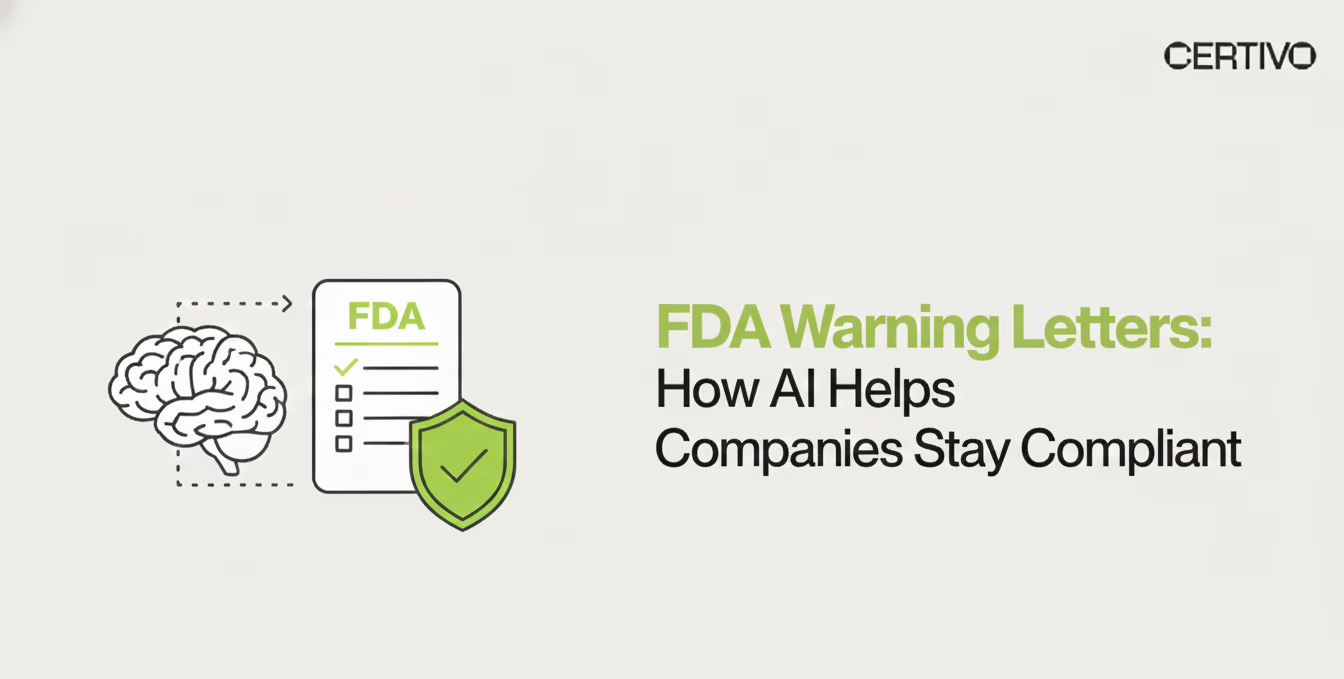
The number of FDA warning letters is projected to rise in 2025 as the U.S. Food and Drug Administration closely examines AI-powered medical devices. The gap in algorithm validation and the lack of post-market surveillance are some regulations manufacturers of medical devices that are already facing difficulties in adapting to the changing FDA compliance requirements. Quality assurance systems that relied on manual documentation, spreadsheets, and disjointed workflows are now considered inadequate for meeting current regulatory standards.
The AI-driven FDA compliance software is freeing the companies to manage their medical device quality management systems (QMS) in a different and better way. Manufacturers, through the automation of the validation of documents, the monitoring of CAPA processes, and the provision of real-time risk visibility, can proactively identify issues before they become FDA Form 483 observations or warning letters. Modern compliance platforms are now able to provide support for continuous audit readiness, supplier compliance tracking, and lifecycle compliance management—all these are done by cutting regulatory risks and not by hampering innovation.
The Certivo company assists medical device manufacturers in enhancing their FDA compliance via AI-powered audit preparation, smart document validation, and quality analytics that are predictive. Organizations no longer need to wait for FDA inspection findings to react, but they can, along with that, get the insights on compliance gaps quite early, increase the quality systems’ traceability, and still be aligned with both FDA QSR and ISO 13485 requirements. The more the FDA audits are data-driven and AI-based, the more AI-enabled compliance tools become an integral part of the industry to avoid not only the enforcement actions that are expensive but also to gain the long-term regulatory confidence that is necessary for the health of the businesses.
Uploaded 10 months ago