How Robotics Activities Help Children Develop Critical Thinking and Creativity
In a world where technology is becoming part of everyday life, children need more than textbook knowledge. They need to know how to think, question, experiment, solve problems, and create new ideas. This is where robotics activities can make learning more engaging and meaningful.
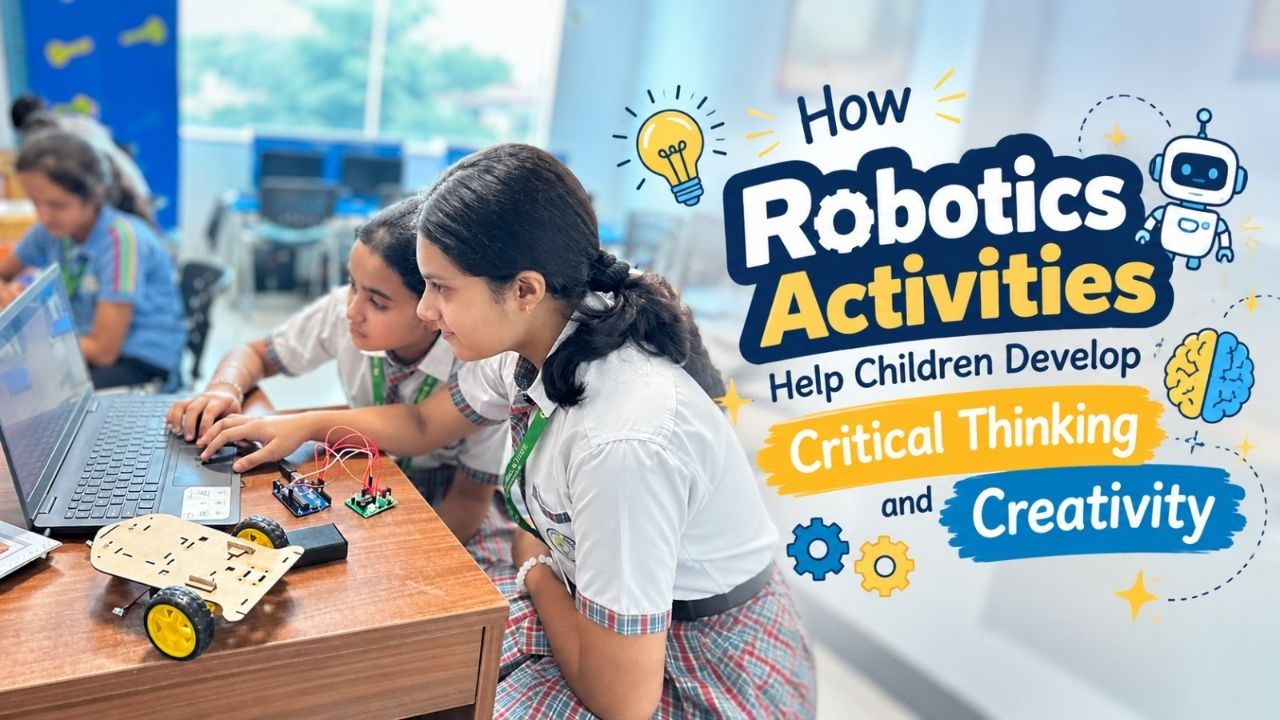
Robotics combines concepts from science, technology, engineering, mathematics, and coding with hands-on activities. Instead of simply learning how something works, children can build, test, make mistakes, and try again.
For students at Ompee Global School in Manesar, Gurgaon, robotics and technology-based learning can complement an experiential approach that encourages curiosity, creativity, critical thinking, and real-world application.
What Are Robotics Activities for Children?
Robotics activities involve designing, building, programming, or controlling robots to complete specific tasks or solve challenges.
Depending on the child's age, activities can include:
Building simple robotic models
Programming a robot to follow a path
Creating obstacle-avoiding robots
Using sensors and motors
Solving simple coding challenges
Designing robots for real-life problems
Working on team-based STEM projects
The important part is not just building a robot. It is the thinking process behind the project—understanding a problem, planning a solution, testing it, identifying mistakes, and improving the design.
Research from NCERT's Central Institute of Educational Technology describes robotics-based learning as an integrated STEM/STEAM approach involving designing, building, testing, and refining solutions while developing skills such as critical thinking, creativity, collaboration, and technological literacy.
Uploaded 1 month ago