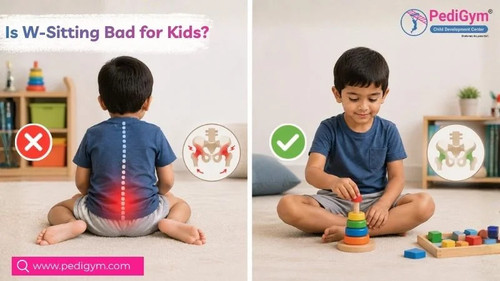
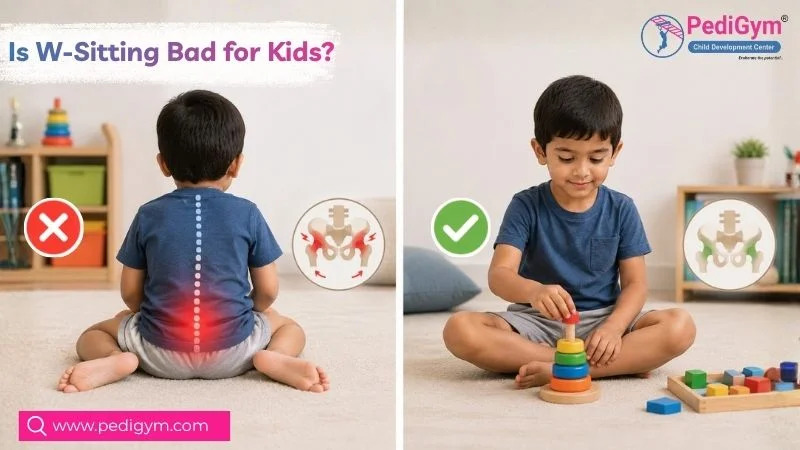
W-sitting is a common floor-sitting position among toddlers and young children, but many parents worry that it may affect hip development, core strength, posture, or overall motor development. This blog explains what W-sitting actually means and what current research says about its possible effects. It highlights that occasional W-sitting has not been shown to cause hip dysplasia or developmental delay and should not automatically be treated as a medical problem. Instead, parents are encouraged to look at the child’s overall movement, including balance, coordination, strength, posture, motor milestones, and the ability to move comfortably between different positions. The blog also explains why some children naturally prefer W-sitting, discusses concerns related to hip development, core strength, trunk rotation, muscle tightness, and developmental delays, and clarifies that W-sitting itself does not cause autism or developmental disorders. Practical ways to gently encourage other positions are also covered, including criss-cross sitting, long sitting, side sitting, kneeling, squatting, active floor play, and regular position changes. Parents are advised not to constantly correct or punish a child for W-sitting, but instead to introduce alternative positions naturally through play and movement. The article also outlines situations where professional advice may be helpful, such as persistent preference for W-sitting along with poor balance, frequent falls, stiffness, pain, difficulty changing positions, or gross and fine motor delays. Overall, the focus is on encouraging healthy movement variety rather than creating unnecessary concern about one particular sitting posture.
Visit Us For More Information:-
https://pedigym.com/is-w-sitting-bad-for-kids/
Address: 382, Sector 17, Faridabad, Haryana 121007
Phone: 9873971012
Email: pedigymsector17@gmail.com
Concerned about your child’s sitting posture or motor development? Get professional guidance from PediGym today.
Uploaded 1 month ago