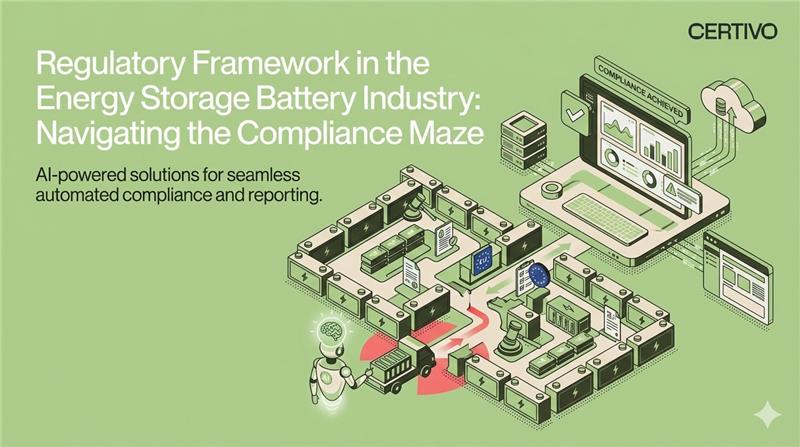
The regulatory framework for the Energy Storage Battery Industry has become one of the most complicated compliance scenarios that modern energy producers have to deal with. The main reason for this is the fact that Battery Energy Storage Systems (BESS) now have to comply with a mix of safety, sustainability, grid-interconnection, and supply-chain regulations not only on the US market but also in the EU. The companies that do not comply with the regulations are facing much more than just fines—they can be banned from the market, experience project delays, or have their systems declared uninsurable.
The rapid growth of compliance requirements can be traced back from FERC Order 841, which allowed US market participation, to the EU Battery Regulation, which introduced digital battery passports and extended producer responsibility. Apart from that, manufacturers have to comply with the following: heating radiation safety standards, UL 1741 certification, NFPA 855, and RoHS materials all at the same time as they are managing thousands of supplier declarations throughout their global supply chains.
This is the point where Certivo changes the game of compliance execution. Being an AI-driven compliance management platform, Certivo performs automatically such functions as certificate collection, BOM-level risk analysis, and real-time regulatory monitoring throughout Energy Storage Systems (ESS). Rather than responding to audits and failures, companies implement continuous compliance visibility, reduced regulatory risk, and faster market readiness.
For the companies involved in battery production and ESS development, being compliant with the regulations is not optional anymore—it has become a strategic requirement to achieve scale, bankability, and long-term growth. To understand this in detail, read the full guide here: https://www.certivo.com/blog-details/regulatory-framework-in-the-energy-storage-battery-industry-navigating-the-compliance-maze
Uploaded 9 months ago