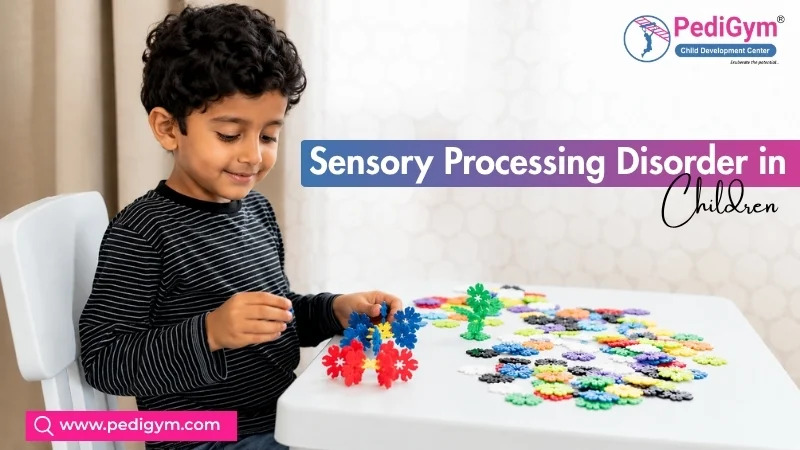
Sensory Processing Disorder in children involves differences in how the nervous system receives, organizes, and responds to sensory information, which can affect how a child experiences touch, sounds, movement, sights, tastes, smells, body awareness, and internal sensations. This blog explains the eight sensory systems and how sensory processing challenges may appear through over-responsiveness, under-responsiveness, or sensory-seeking behaviors. It covers sensory modulation difficulties, sensory-based motor challenges, and sensory discrimination difficulties, along with signs that parents may notice at different ages. Toddlers and preschoolers may experience feeding difficulties, resistance during grooming, sleep disruption, distress around textures, or difficulty calming after stimulation, while school-age children may struggle with noisy classrooms, transitions, attention, fine motor skills, movement, or emotional regulation. Older children may experience anxiety in stimulating environments, emotional fatigue, activity avoidance, or difficulty recognizing internal body signals. The article also discusses possible contributing factors, including neurodevelopmental differences, genetic influences, premature birth, developmental challenges, and differences in sensory integration pathways. It explains that sensory processing challenges can occur alongside autism, ADHD, developmental delays, learning differences, and anxiety, but they are not the same condition. Assessment may involve parent interviews, sensory questionnaires, observation through movement and play, and evaluation of how sensory differences affect learning, self-care, emotional regulation, motor development, and social participation. The blog also discusses support through occupational therapy, sensory integration approaches, parent coaching, school collaboration, and individualized home strategies. It explains that a sensory diet is not related to food but refers to a personalized schedule of sensory activities that may include movement breaks, deep-pressure activities, quiet spaces, jumping, structured transitions, or other strategies suited to a child's needs. Practical activities such as obstacle courses, animal walks, water play, climbing, texture exploration, children's yoga, and safe pushing or carrying activities are also discussed. Overall, the article emphasizes that every child has a different sensory profile and that the goal of support is to help children regulate, participate, and function more comfortably in everyday environments rather than simply forcing them to tolerate uncomfortable sensations.
Visit Us For More Information:-
https://pedigym.com/sensory-processing-disorder-in-children/
Address: Site No. 2120, Udgam Pre School, 1st Floor, behind Police Station Phase ll, DLF Phase 2, ll, Gurugram, Haryana 122002
Phone: 8368430528
Email: gurugrampedigym@gmail.com
If sensory challenges are affecting your child’s daily life, consider a professional sensory assessment for personalized support.
Uploaded 1 month ago