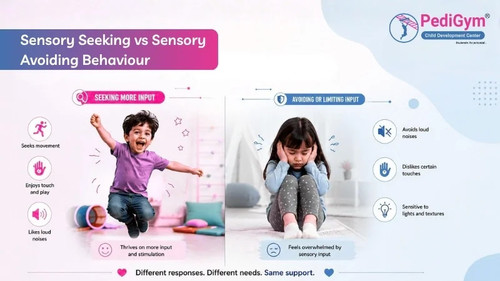
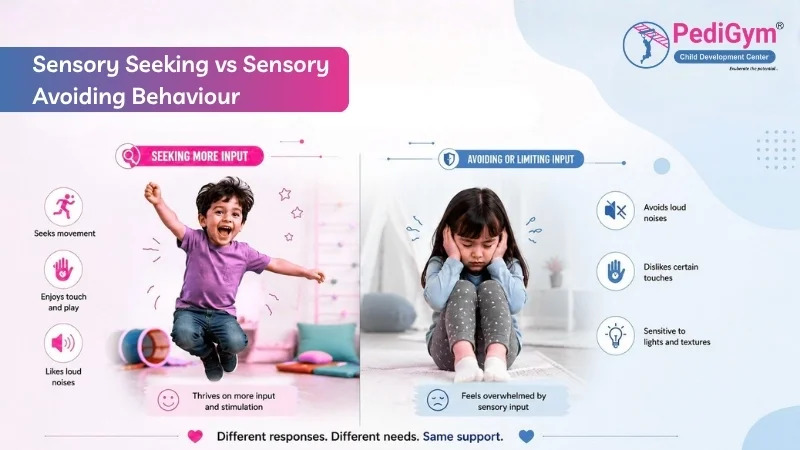
Sensory seeking and sensory avoiding describe different ways children may respond to everyday sensory experiences, and understanding these patterns can help parents respond to their child with greater patience and empathy. This blog explains that a sensory-seeking child may look for extra movement, touch, pressure, or other sensory input to remain focused and regulated, while a sensory-avoiding child may become overwhelmed by sounds, textures, bright lights, crowded places, or unexpected touch and try to reduce sensory input. It discusses common signs parents may notice, such as climbing, jumping, spinning, crashing into cushions, chewing objects, or constantly seeking movement in sensory-seeking children, compared with covering the ears, refusing certain clothes or food textures, avoiding noisy environments, or becoming distressed during haircuts and messy play in sensory-avoiding children. The article also points out that children can have a mixed sensory profile, meaning they may seek some types of sensory input while avoiding others, so one behavior alone should not be used to label a child. It explains the role of the different sensory systems, including the vestibular, proprioceptive, and interoceptive systems, and how differences in sensory processing can affect attention, emotional regulation, learning, play, motor development, and participation in everyday routines. The blog further explains when sensory preferences may be more than a temporary phase, particularly when they regularly interfere with dressing, eating, school participation, social activities, sleep, play, or family routines. It also discusses the connection between sensory processing differences, autism, ADHD, and developmental challenges while clarifying that sensory processing difficulties can also occur in children without a formal diagnosis. Parents are encouraged to observe what situations help their child feel calm and which environments or sensations cause difficulty rather than simply trying to stop sensory behaviors. Practical home strategies may include movement and heavy-work activities for children who seek sensory input, while predictable routines, comfortable clothing, quieter spaces, and reduced sensory overload may help children who are more sensitive to stimulation. The blog also explains how pediatric occupational therapy and sensory integration therapy can help identify a child’s individual sensory needs and develop personalized strategies, including sensory diet activities when appropriate. Most importantly, the article emphasizes early assessment when sensory behaviors begin affecting a child’s learning, confidence, independence, relationships, or ability to participate in daily activities.
Visit Us For More Information:-
https://pedigym.com/sensory-seeking-vs-sensory-avoiding-behaviour/
Address: 382, Sector 17, Faridabad, Haryana 121007
Phone: 9873971012
Email: pedigymsector17@gmail.com
Concerned about your child’s sensory behavior? Get a professional sensory assessment at PediGym today.
Uploaded 1 month ago