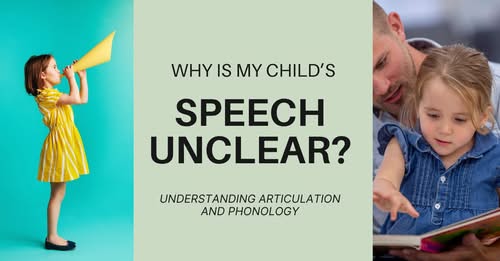
Every parent loves hearing their child talk, until the words start sounding… well, a little off.
“Tat” instead of “cat.”
“Pane” instead of “plane.”
Cute at first but when it continues past a certain age, it could signal something more.
By around age 4, most children should be understood almost all the time, even by strangers.
If your child often drops or swaps sounds and gets frustrated trying to explain themselves, it might be time to check in with a speech-language therapist.
At Total Communication Therapy, we look beyond pronunciation; we help children understand how sounds work and why certain patterns persist. Whether it’s articulation (difficulty making a sound) or phonology (a pattern of sound errors), early support can make a huge difference.
Because when speech becomes clearer, confidence follows.
Learn more about articulation and phonology in our latest blog:
Uploaded 5 months ago
Direct links
Image link
Image URL
Full image (linked)
Website (HTML)
Forums (BBCode)
Share image
Image information:
Every parent loves hearing their child talk, until the words start sounding… well, a little off.
“Tat” instead of “cat.”
“Pane” instead of “plane.”
Cute at first but when it continues past a certain age, it could signal something more.
By around age 4, most children should be understood almost all the time, even by strangers.
If your child often drops or swaps sounds and gets frustrated trying to explain themselves, it might be time to check in with a speech-language therapist.
At Total Communication Therapy, we look beyond pronunciation; we help children understand how sounds work and why certain patterns persist. Whether it’s articulation (difficulty making a sound) or phonology (a pattern of sound errors), early support can make a huge difference.
Because when speech becomes clearer, confidence follows.
Learn more about articulation and phonology in our latest blog: